
Haz clic aquí para leer este post en español
Maybe you are staying a few hours or longer, but here are the MUSTs that you have to do and see when you come to Malaga city. Travel through History and savor the tour I give my friends. As everything is located in the center, you can walk everywhere, so, don’t forget wearing comfortable shoes. Besides, it can be adjusted to every budget, from 0€ to whatever you want to spend.
Start with the local breakfast
If you arrive early in the morning, normally you can have breakfast from 7:30 am to 12:00 pm. First of all, and in case you are a Java-junkie, you need to learn how to order coffee.

There are many places to go, but it will depend on what you want to eat. Malagueños can either have something sweet, for example, churros, fried-dough pastry that you dip in hot chocolate or coffee; or something salty, like a pitufo (literally, Smurf, due to its size), a soft bread roll with filling, traditionally ham and cheese, although it can also be something sweet such as jam.
The former can be Porras or Madrileños. If they are square-shaped with round edges, as the ones on the picture, they are called Porras and they are typical from South Spain. So if you travel around Andalusia, you will be able to try them too. In case they are star-shaped and thiner, they are called Madrileños and they come from the capital of the country.

On the other hand, the latter, the Pitufo, is a sandwich that was created approximately 35 years ago but it has become a local icon. It is a small soft bread roll filled with your selection which can be ham and cheese, Spanish ham and freshly grated tomato (called Catalana), manteca colorá, butter, jam, etc.
Where to go for these treats? Here are my suggestions: Casa Aranda for Porras, Café Madrid for Churros Madrileños or Pitufos and Roy’s for oversized Pitufos where, for only 2.50€, you can also get your cup of coffee and a glass of freshly squeezed orange juice.
Visit Puerta del Mar
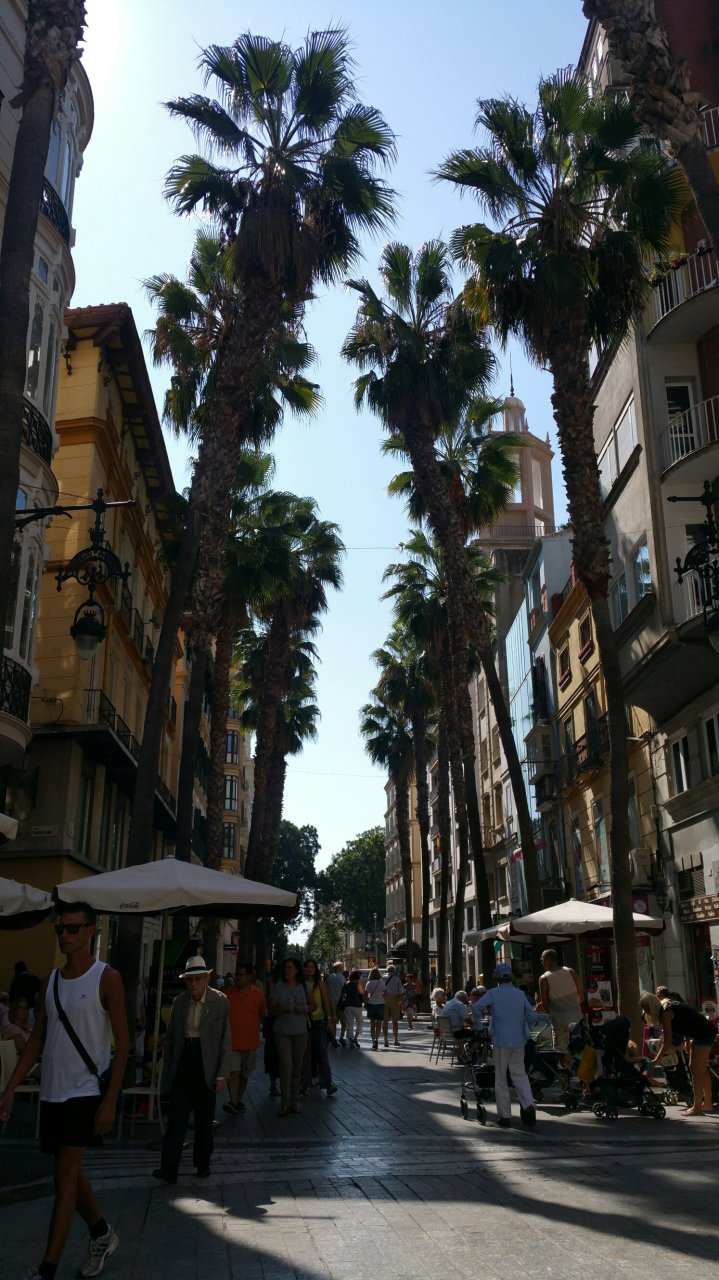
After you are full of energy, I advise you starting at Calle Puerta del Mar, which means gate of the sea, because one of the entrances of the medieval city walls was placed there. So all you can see down the street in the south, like buildings, Alameda Principal, and so on, were built on top of the water during the 19th century.
Go to Mercado de Atarazanas
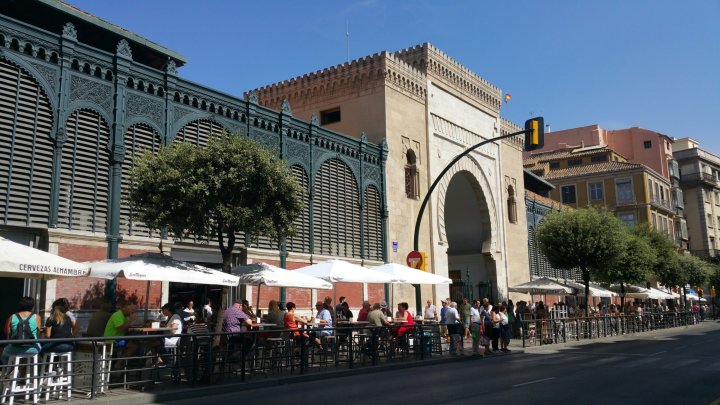
Set where formerly was a Nasrid shipyard, hence its name Atarazanas, this place is a sample of architectural eclecticism. The main gate, dated back to the Muhammed V of Granada reign, was also part of the old metropolis wall, and its structure of iron and stone was inspired by Les Halles de Paris, the traditional central market in the heart of the French capital. In the main nave, you will see a stunning stained glass window picturing the city highlights. Walk along the halls among the stalls and bars and use the occasion for finding the best local goods for a fair price. In addition, thanks to the climate, there are also tropical products that are grown in the region.
In the event that you want to become well-versed in the ethnography and ethnology of the province, you can visit the Museo Unicaja de Artes y Costumbres Populares which is very close.
Don’t miss Plaza de Félix Sáenz
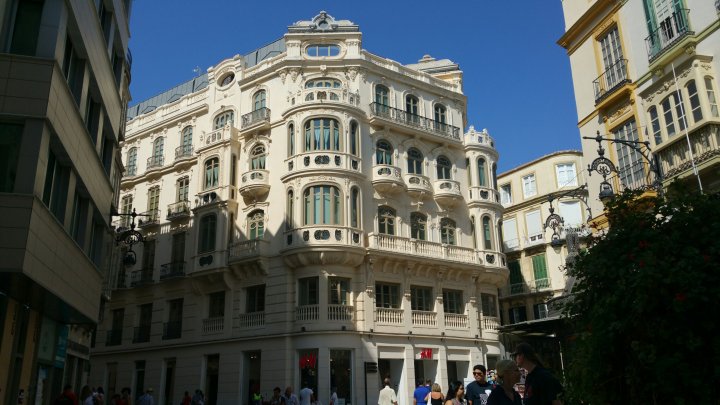
If you exit Mercado de Atarazanas and take Calle Sagasta you will arrive to Plaza de Félix Saénz. It used to be the grain trade location, but now, it hosts one of the best representations of Art Nouveau architecture and the first Modernist building in Malaga, Almacenes Félix Sáenz by Manuel Rivera Vera. You may also notice, Casa Dorada para Pájaros, a golden dovecote, by the sculptor Jaume Plensa.
Iglesia de San Juan Bautista, a sample of Mudejar art
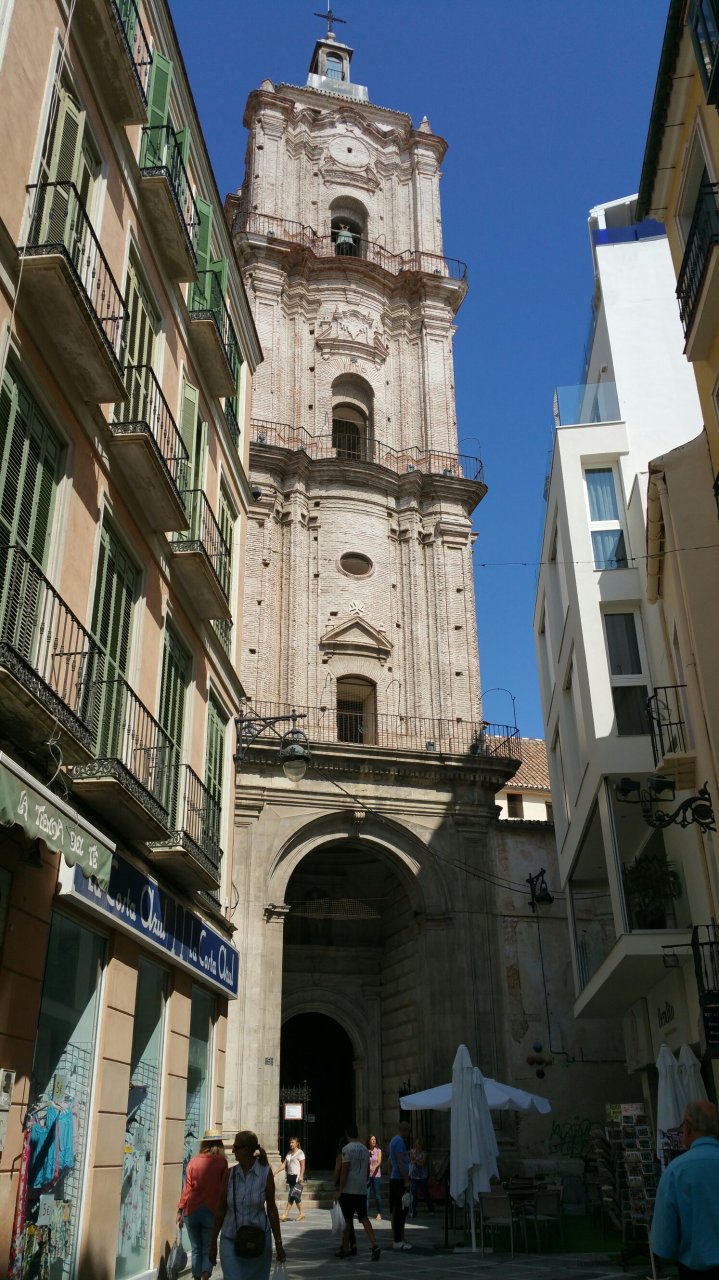
Walk along Calle San Juan to find this hidden gem that was built at the same time as Iglesia de Santa María del Sagrario, Iglesia de Santiago Apóstol and Iglesia de los Santos Mártires upon request of the Catholic Monarchs after the Siege of Malaga. Marvel yourself with this great example of Mudejar architecture where you may discover secret clues that will lead you to learn more about its history and heritage.
Enjoy the beauty of Iglesia del Sagrado Corazón
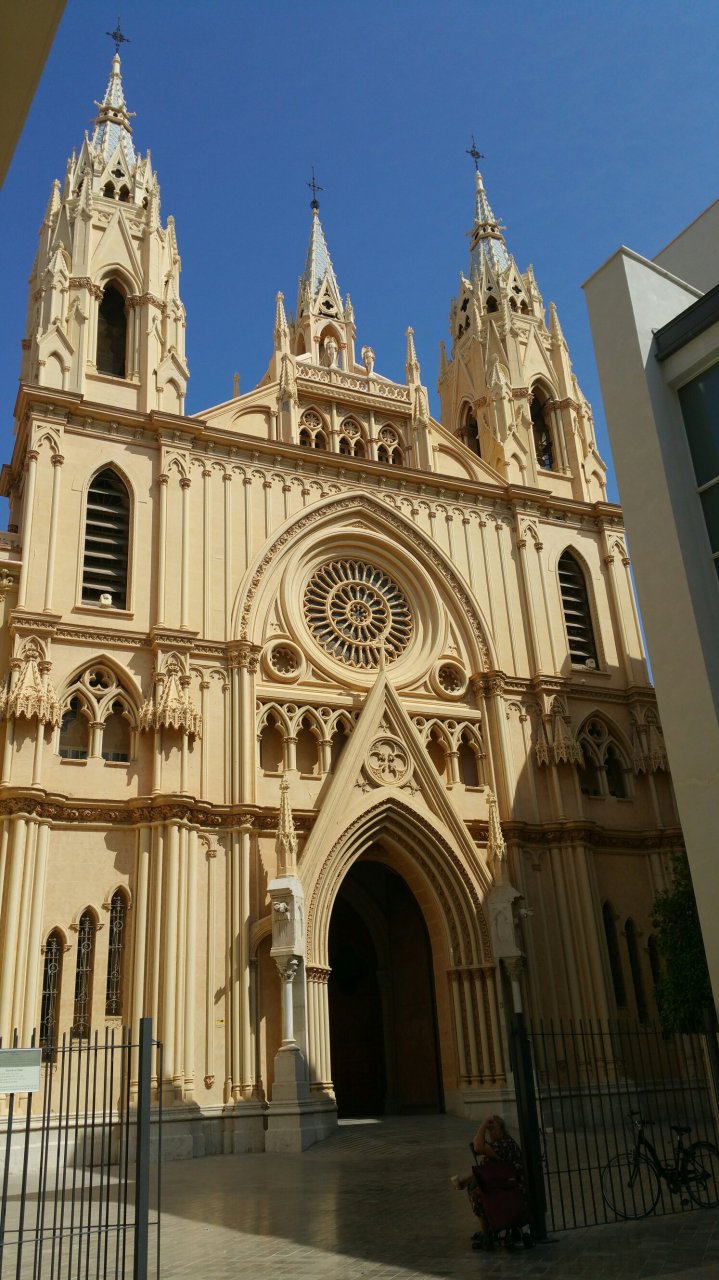
Take Calle Santos and discover this Neogothic church at Plaza de San Ignacio de Loyola. This architectural wonder, almost concealed amongst buildings and narrow streets, was built by Fernando Guerrero Strachan in 1920 and it is one of my favorite façades in Malaga, so be ready to get impressed.
Carmen Thyssen Museum is round the corner, so if you have time, don’t miss its selection of 19th century Spanish paintings, although sometimes they also have spectacular temporary exhibitions.
See an example of Malaga Holly Week imagery at Iglesia de los Santos Mártires
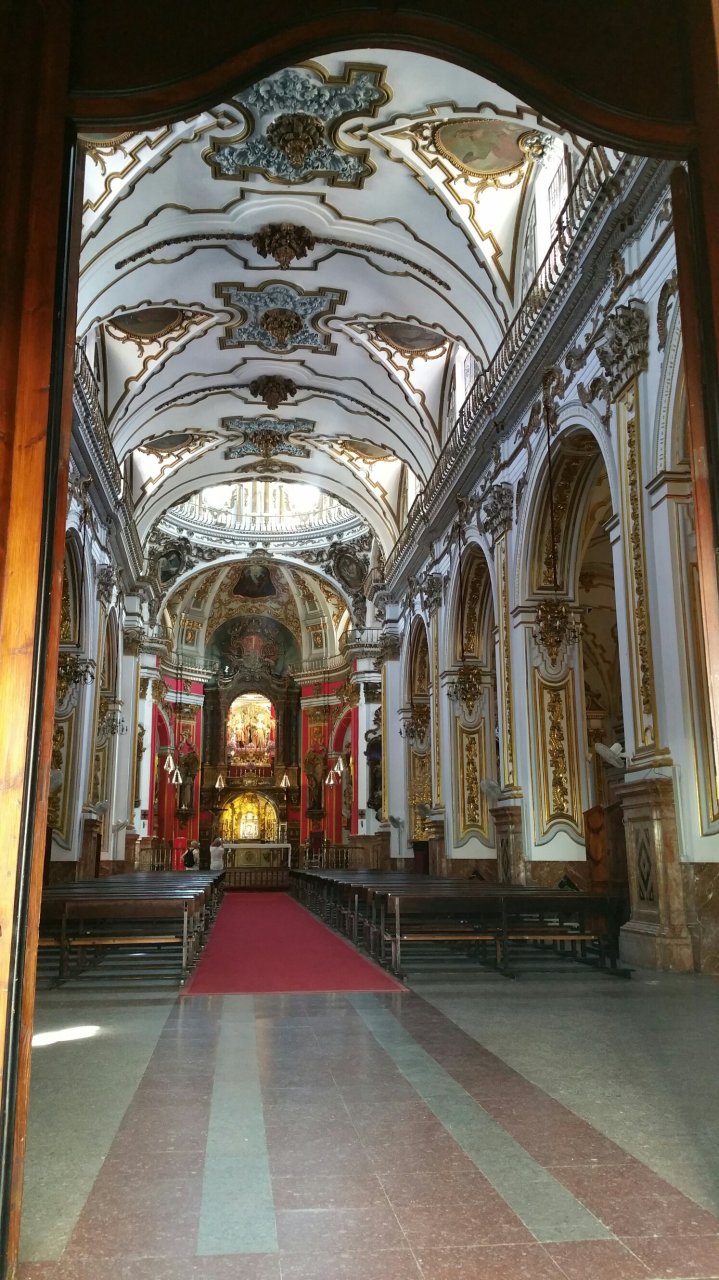
At the end of Calle Mártires you will come upon Iglesia de los Santos Mártires. It was, originally, a Gothic-Mudejar church but now it combines different architectural styles including Rococo from the 18th century. This temple hosts 4 brotherhoods, so you may be able to see the images of the Virgins and Christs that are taken out to procession during Holy Week. If you want to learn about Malaga culture, this is one of the places you have to visit as it was built in honor of the patron saints of the city, San Ciriaco and Santa Paula.
Explore the City Walls: from the Phoenicians to Medieval times
If you take Calle Andrés Pérez and turn right to Calle Carretería, you will see the Medieval wall as it used to be after its restoration in the 90’s. There’s part of the original one built in a bookshop at Calle Puerta Buenaventura. On the other hand, you can see the remains of the harbor barrier from the 17th century, underground, at the parking lot in Plaza de la Marina; and finally, if you visit the Rectorado de la Universidad de Málaga, the former Post Office (Antigua Casa de Correos y Telégrafos), the Neo-Mudejar building will reveal the remains of the Phoenician walls hidden in their basement and Roman garum basins.
When you are at Plaza de la Marina, you will find out the iron sculpture of a man called El Cenachero, the embodiment of the fisherman street vendors who hawked, now an extinct job, and a popular symbol of the city along with the Biznaga (an artificial flower made of a jasmine bouquet in a dried thistle flower) and the Boquerón (which means anchovy).
Stroll along Calle Marqués de Larios
Begin at Plaza de la Constitución, the main square since the 15th century, which, depending on the history period, had a different name, and enjoy the exquisiteness of its mysterious Renaissance Fuente de Génova (Genoa fountain).
Calle Marqués de Larios, promoted by Manuel Domingo Larios y Larios, the Marqués de Larios, is ideal to see and be seen as well as great for shopping and drifting around.
During the 19th century, almost all the little streets, which are typical at any old town/city center, had to be destroyed because of epidemics. Hence its unusual wide for a city that was founded by the Phoenicians. Subsequently, here is the most remarkable representation of Malaga Golden Age and one of the most important calles, in terms of commercial rent in Europe. According to my History high-school teacher, who was an enthusiast of the city’s chronicles, it originally had parquet flooring because the Marquis, the developer, wanted Malagueños to relish the same floor he had at home. Nevertheless, with the passing of time and due to its deterioration it had to be removed.
Enjoy the magnificent architecture inspired by Chicago School, get an ice cream at the oldest heladería, Casa Mira, have a cup of coffee at Café Central like an intellectual, treat yourself at Lepanto or buy beauty products cheaper than at the airport duty-free shops at Primor.
Appreciate the charm of The Cathedral, Iglesia de Santa María del Sagrario and the Palacio Episcopal.
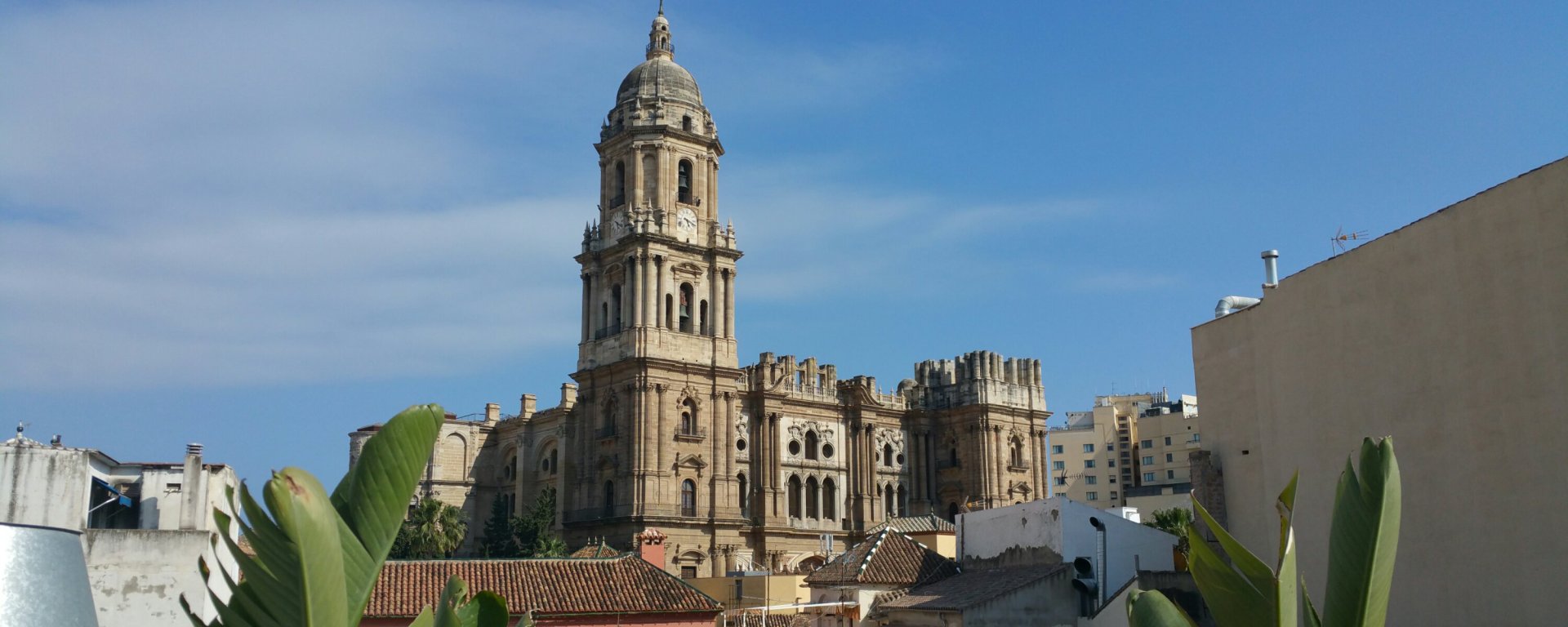
The Santa Iglesia Catedral Basílica de la Encarnación, the Cathedral, is one of the most prestigious gems of Renaissance in Andalusia designed by Diego de Siloé and Andrés de Vandelvira. You may see the humanist movement prevail over Gothic and also notice Baroque details included at the beginning of the 18th century like its main façade with spiral columns. Located at Plaza del Obispo, its construction began in 1528 and “ended” in 1782, because something that makes it unique is that one of its towers is missing and that’s why it is called La Marquita (the little one-armed). It is believed that the money set aside for this purpose was used to help the United States during its Independence as is stated on a plaque at its basis, although registry researches have shown that the funds were given to the reconditioning of Antequera road. It is planned to be finished on the 5th centenary of its construction. If you are staying longer than 24 hours, you should see its interior and rooftop, you’ll be astonished.
In this square, you will see the Palacio Episcopal, a sample of civil architecture with Baroque touches by Antonio de Ramos.
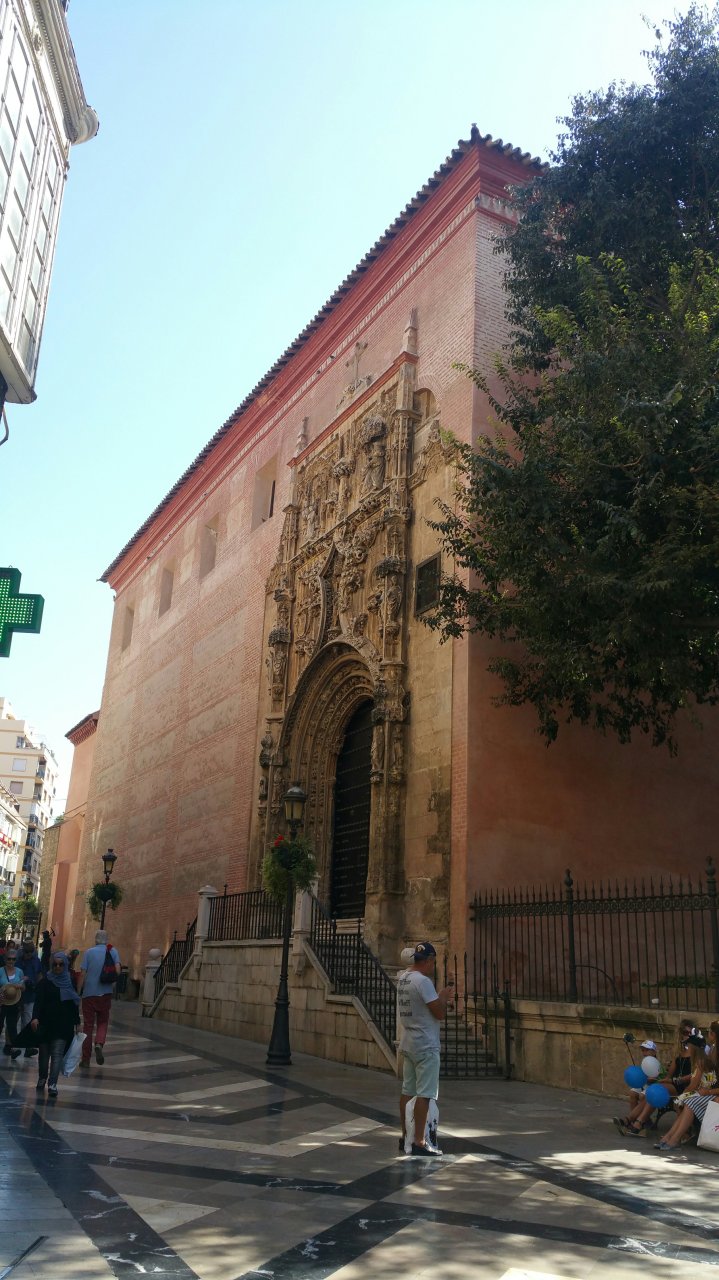
Don’t skip the Iglesia de Santa María del Sagrario on the Cathedral north side which has a notable Gothic façade of Isabelline style and the oldest of the temple. This was going to be the Catedral, but it ended up being just one more chapel. In addition, it must be said that it seems like its foundation hides the remains of a Visigothic sanctuary.
The oldest church in Malaga: Iglesia de Santiago Apóstol
Take Calle Granada, which is an example of the way old streets zigzagged as legacy of the Islamic culture, in order to imagine how the city center was before the 19th century influence and to visit Iglesia de Santiago Apóstol, the place where Picasso was baptized and the oldest temple in the capital. After the Reconquista, the Catholic Monarchs ordered its construction in 1487. It plied as the cathedral while it was being built and the composition combines two architectural styles: Gothic-Mudejar and Baroque.
If you wish, have a look to the Museo Picasso, there are marvelous works by the painter and a fantastic collection of local paintings that are worthy.
Luxuriate in Malaga Wine
For this purpose, you’ll do a little tour, so I advise you taking a map beforehand and marking all the places that interest you, this way, depending on your current location, you can choose where to head to.
Begin at Antigua Casa de Guardia, the oldest bar in Malaga, from 1840. Here, waiters write your orders as it used to be, on the table with a piece of chalk. Drink a glass of Pajarete and be pleased by the atmosphere while you scrutinize the place, its tables, original tiles, wooden doors, old pictures of the city…
Secondly, try the best Malaga wine, Quitapenas Dorado, at Bodegas Quitapenas. It is sweet and full of personality, so as stated in its name, get rid of sorrow while you act like a local. Bear in mind that Spaniards eat while drinking alcohol, so start tapas hopping and order some like gambas al pil-pil, cooked with garlic, olive oil, chili pepper and paprika (it’s a little bit hot, but not too spicy and it will be something you will love).
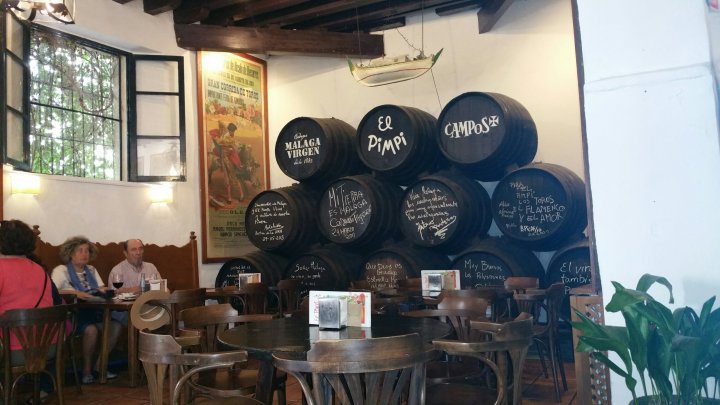
Your third provisioning stop is El Pimpi. A traditional Andalusian house with typical Spanish decorations, such as a bull head or patios filled with plants, that has been turned into a gorgeous bar whose walls have been covered with famous visitors’ photos or old Spanish fair billboards while displaying wine barrels autographed by celebrities. Order a bottle of Malaga wine and have some tapas in which you should include jamón ibérico (Iberian ham) and queso manchego (cheese) or a delicious bread roll with pringá. Their menu offers the most archetypical dishes, so you can savor the country’s local products. Be ready to fascinate yourself with your 5 senses and dive in its atmosphere.
It must be taken into account that Spaniards, and especially Andalusians, can go for tapas from 12:00 pm to 4:00 pm. It can be as starter, and then go home or to a restaurant for lunch, or you can continue going to different bars and make your own route. Generally, local lunchtime is normally from 1:00 pm to 3:30 pm and the peak hour is at 2:00 pm.
In case you want to learn in depth about Malaga wine, and you’re staying a few days, go to the Museo del Vino.
Travel to Malaca Antigua
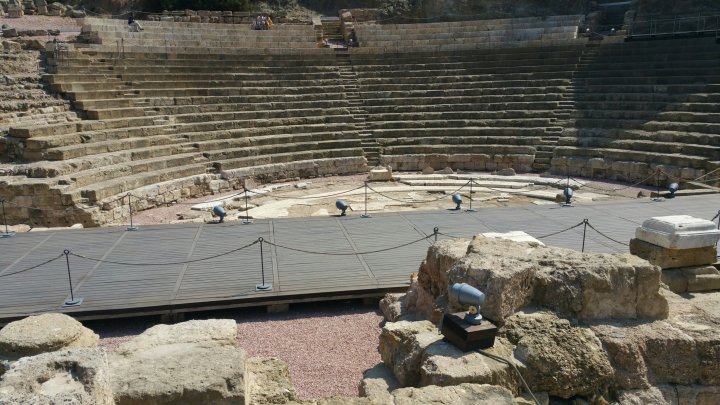
When you walk out El Pimpi, you will see the Roman Theater, Teatro Romano, which is the main archaeological remain of Malaca (as the city was called when it belonged to the Empire) erected during the 1st century B.C.. It was discovered in 1951 when a green space was being created. Ironically, the Casa de la Cultura, the building that hosted the city library, archives and museums, was constructed on top of it. Fortunately, it was demolished in the 90s to let this masterpiece see the light. Nearby, you will also discover the remains of a garum factory.
Moorish Architecture: Alcazaba and Castillo de Gibralfaro
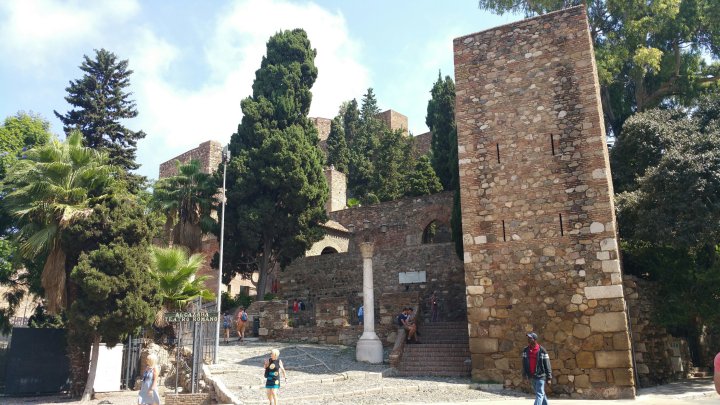
The Alcazaba is a palace-fortress, located on Mount Gibralfaro slope, next to the Teatro Romano, and linked to the defensive castle Castillo de Gibralfaro through a walled hallway called La Coracha. This Arab citadel was built between 1057 and 1063 and employed outsourced and reused materials, that is the reason you can find Roman columns and capitals in its structure.
If you come during summertime, you can also visit it at night, which I highly recommend; and if you are lucky and it’s La Noche en Blanco you can do so as well but for free, because that night all the museums are open until late and gratis whereas the streets are filled with art, concerts and activities.

Strategically, on top of the mount lies the Castillo de Gibralfaro, which was formerly a Phoenician facility with a faro (lighthouse in Spanish) that named the hill. Abd-ar-Rahman III transformed the ruins to a fortress and Yusuf I, Sultan of Granada, made it a castle, then, during the Reconquista, Ferdinand the Catholic took it as his residence while Isabella I of Castile chose living in the city. The views are magnificent and on a clear day, you can even see Morocco and the Strait of Gibraltar. You can get there through La Coracha, which is also the name given to the walled hallway inside the facilities and the track that leads towards the castle from the Alcazaba. If you use this way, get ready to walk uphill, but your effort will be rewarded by the views at a scenic lookout overlooking the bay at Mirador de Gibralfaro.
In case you are not in the mood for rambling that much or you are running out of time, you can always take the elevator to AC Hotel Malaga Palacio rooftop terrace for the panorama.
You may also would like to know that La Coracha was also the name of an old gorgeous neighborhood located between the south side of the Alcazaba and the old harbor during Al-Andalus time. It was packed with wonderful narrow streets filled with traditional Andalusian white houses. When you preambulated there, it was like traveling in time. Unfortunately, it was demolished in 1990 to make the current way towards the fortress. The only remain is La Odisea, Vinos de Málaga a shop and a bar set in a building from the 18th century that promotes traditional and local products.
Palacio de la Aduana, one of the hidden gems

In 1787, Charles III ordered the construction of this exquisite neoclassical building which was planned to be the harbor Customs, although in 1829 it was opened up as a Royal Tobacco Factory. In 1839 it was the headquarters of the Internal Revenue Service, and years later firstly the County Council and then the Government Regional Deputy Delegate office. It now hosts the Museo de Málaga, one of the most impressive collections in the city of art and archaeology. So if you have time, get in and let it leave you open-mouthed. Did you know that Malaga province boasts the largest concentration of Paleolithic art in the Mediterranean and one of the largest on the European Continent?
Fun fact: when Isabella II of Spain visited Malaga with his husband in 1862, Malaga society tried unsuccessfully providing them a suitable lodging, so they decided to host them in this building and buy luxurious furniture, which were sold after the Royal visit.
Wander along a botanical garden: Parque de Málaga
The origin of the botanical garden at the Parque de Málaga was a honeymoon in the 19th century. When Jorge Loring y Oyarzábal and Amalia Heredia Livermore got married, they travelled around the world for a year on their post-nuptial vacation. She was educated as well as an aficionado to plants, books and archaeology, so she picked seeds during her journey and so she did whenever she went on a trip, and asked her friends for more if they travelled, creating the wonderful gardens of Jardín Botánico Histórico La Concepción at their recreational home, which is one of the few subtropical climate jardins in Europe. The Marqués de Larios and Cánovas del Castillo were the main developers of the Parque de Málaga and the extension of the harbor. As Amalia Heredia Livermore was the latter’s relative and he was friends with the Loring-Heredia couple, she shared some of her plants with the Malagueños making it one of the most important public parks in the Continent. Enjoy the great pleasure of walking under the shade of the branches while you feel the sea breeze and you observe Renaissance and Baroque elements.
This park also has splendid buildings as the Neo-Mudejar Rectorado de la Universidad de Málaga, the Neoclassical Banco de España and the Neo-Baroque with Modernist details Casa Consistorial de Málaga, the City Hall.
If you saunter towards the tunnel, next to La Coracha, you will be able to see the name of the city in Phoenician, Malaka, written on one of its walls.
The Present, Muelleuno at Malaga Harbor
The harbor was the beginning of civilization in the city, firstly the Phoenicians (around the 9th century B.C.), then followed by Carthaginians, Romans, Visigoths, the Byzantine Empire, the Nasrids and finally, the Catholic Monarchs, whose heritage is perceivable nowadays. As you have learnt, the anchorage was close to Puerta del Mar, Mercado de Atarazanas, Alcazaba and Catedral, but with Charles V, in the 16th century, started its extension and modification to what we know today. As a consequence, you can see, while you walk down Muelleuno, one of the most beautiful promenades by the sea, how the past meets the future, such as a chapel from 1732 among restaurants and shops, La Farola (the lighthouse) from 1817, the remains of the huge marble blocks as well as Malgueño iron bars used for its construction in the 19th century or El Palmeral de las Sorpresas from 2011.
For your information, the Centre Pompidou Malaga is at the corner of the shopping center, just in case you want to visit it.
More places that deserve your time outside the city center: Plaza de Toros de La Malagueta, Palacio del Miramar, Baños del Carmen and Pedregalejo.
If you feel like getting away from the center and see more places that worth a visit, head towards La Malagueta and go to the Neo-Mudejar bullring, Plaza de Toros de la Malagueta, built in 1874 by Joaquín Rucoba.
Walk a bit more and visit the Palacio de Miramar, a Modernist hotel designed by Fernando Guerrero Strachan in 1926 that was later the Provincial Courts and currently a luxury 5-star hotel called Gran Hotel Miramar.

Continue your stroll on the sea promenade or take a bus to one of my favorite places in the capital, Baños del Carmen, a spot opened in 1918 as ludic area for the high society. Back then, all the baths were covered and men and women should swim separately without being able to see each other but here they broke this tradition for the first time. It should be noted that it was wild and semi abandoned for several years, although this romantic place has been a little bit restored and now consists of a beach, a bar and a restaurant with flamenco shows almost every weekend.
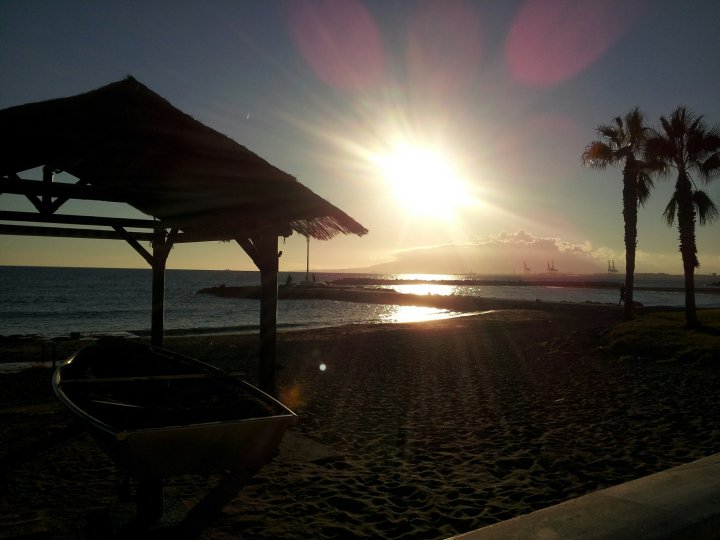
Leave Baños del Carmen and enter Pedregalejo, formerly an old fishermen neighbor that has turned into one of the most expensive barrios in the city. The old seafront little homes have been turned into two- or three-storey houses, beach bars and seafood restaurants and it is highly frequented by locals during summertime and every weekend year-round for a cup of coffee or a long drink while watching the sun setting. However, if you wish seeing any of those tiny fishermen’s dwellings, you have to go to El Palo.
End up your day with a lovely dinner
Finally, after all the work, I bet you will be hungry, so go to one of the best restaurants in Malaga which you will discover in another post; whereas if you want to party or have a drink, have fun inside a traditional local home from the 19th century that has been turned into a nightclub at Liceo, which keeps the original layout, the beautifully carved wooden doors, the mythical cement tiles or the fabulous stained glass windows.
I hope you enjoy it!

 Be One of The Locals
One thought on “Malaga in Just 1 Day”